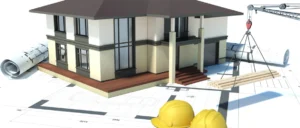

Topographic surveying is the practical starting point for any serious engineering project, because sound design decisions are not built on guesswork, but on accurate site data that clarifies the reality as it is: land boundaries, existing buildings, natural elements, obstacles, and elevations and depressions. Professional bodies indicate that this type of survey is used to produce an accurate site plan that can be presented in a two-dimensional format or as a three-dimensional digital model, and is utilized by architects, engineers, and planners before development or execution.
When site data is incomplete or outdated, the probability of design conflicting with reality increases, whether in site levels, service locations, boundary shapes, or setback areas. Therefore, professional standards emphasize defining the required accuracy, coordinate system, vertical datum, and final deliverables from the outset, so that survey results become practically usable in design, execution, and decision-making.
It is a technical process for accurately recording the locations of natural and man-made features within a plot of land or a project site. This includes measuring land boundaries, existing buildings, fences, roads, trees, ground levels, and elements affecting the design.
These data are then converted into a topographic map or a digital file that clarifies the actual shape, dimensions, and coordinates of the site. Professional standards indicate that survey work that defines approved locations for boundaries, topography, or fixed structures is at the core of the work of surveying specialists, and topographic maps show the surface shape through contour lines that connect points of equal elevation. Therefore, good outputs are not limited to “drawing the shape of the land,” but provide the project team with an accurate reference image that can be confidently built upon.
Importance of Topographic Surveying in Engineering Projects
The value of topographic surveying emerges when the design team begins to make decisions related to building distribution, vehicle entrances, setbacks, drainage, and the project’s relationship with its immediate surroundings. Surveying professionals explain that the site plan resulting from the survey is used by designers to understand the actual land layout when planning buildings and infrastructure projects. It is also relied upon by architects, contractors, planners, and engineers to provide more informed technical advice on the actual slope of the site, topography, and existing elements. In some regulatory or environmental applications, such as flood risk assessment, existing and confirmed elevation data from a topographic survey are also required.
When Does Your Project Need Topographic Surveying?
This work becomes necessary before buying or selling land, when redeveloping an existing building or adding a new extension, before preparing architectural or structural designs, when there is doubt about boundaries, or when there is a need to define details of the surroundings, roads, and surface services. Professional guides also recommend resorting to surveying if the project work will remove existing boundary elements such as walls or fences, or if the project requires proof of existing levels, a study of water flow, or a more accurate understanding of elements that may affect execution later.
Role of Topographic Surveying in Defining Site Boundaries and Dimensions
In sites where boundaries are unclear, or when general property plans are insufficient to show precise details, site surveying becomes a crucial tool for understanding the relationship between the legal boundary and the physical boundary on the ground. RICS clarifies that a general property plan may only show the “general position” of the boundary, and enlarging it for higher accuracy is not recommended, while a detailed survey provides a more accurate level of information that helps in reading land dimensions and fixing the locations of fences, walls, setbacks, and adjacent elements.
Importance of Survey Plans Before Starting Design and Execution
Good survey plans are not used merely for documentation, but to establish design decisions. Professional standards for measured surveys explicitly address elements such as accuracy, control points, coordinate system, vertical datum, and required deliverables, while surveying associations indicate that the designer needs a clear plan to understand land distribution and elevation changes before planning the building or infrastructure. This means that the quality of the plan here directly reflects the quality of the architectural idea, the clarity of sections, the integrity of finishing levels, and the team’s ability to coordinate between CAD, BIM, and field reality.

How Does Topographic Surveying Help Avoid Construction Errors?
Professional evidence confirms that accurate surveying helps reduce unexpected problems and boundary disputes, because the project team works from a realistic reference instead of approximate assumptions. Specialists in surveying also clarify that subsequent setting-out work aims to ensure that the project is executed in the correct place and according to the precise locations of design elements, from foundations to exterior walls. In addition, detecting underground utilities before excavation is an important part of the pre-execution phase, as techniques such as GNSS, total station, laser scanner, and underground utility surveys can identify obstacles, service lines, and pipes, reducing the likelihood of colliding with them during execution.
Role of an Engineering Consulting Firm in Topographic Surveying Works
The presence of an engineering consulting firm enhances the value of survey results because it does not treat data as a final file only, but as a design and execution input. Regulatory standards consider the determination of approved locations for boundaries, topography, and fixed structures as work that must be under the responsibility of a professional surveying specialist, while RICS standards confirm that the success of any survey is linked to the clarity of client requirements in terms of project scope, accuracy level, coordinate system, and deliverables. Here, the consultant’s role comes in transforming project needs into an executable surveying specification, then linking the results to design, coordination, supervision, and risk management.
How Does Arkitectonica Help Provide Accurate Surveying Services?
Arkitectonica Engineering has been operating as a multidisciplinary company since 2006, relying on a team that includes specialized architects, civil engineers, and planners. It also offers integrated engineering consulting services extending from preliminary studies and design to supervision and execution. Based on this integrated scope, its ability to accommodate site survey requirements within the project cycle can be understood, so that field data is not read in isolation from design, timeline, or quality requirements, but is integrated into the engineering decision from its beginning. This is a logical conclusion from the nature of its announced integrated services, not an independent published statement about a separate service named surveying.
Why Choose Arkitectonica for Surveying Services?
With over 15 years of experience, more than 2000 projects, and over 150 employees, Arkitectonica provides engineering consulting, supervision, and project management from its headquarters in Riyadh. It also emphasizes that project success begins with accurate planning and a clear vision, and that it focuses on reducing risks, achieving results efficiently, and adhering to timelines. Therefore, if your project needs to integrate survey results with design, supervision, and execution management within a single integrated system, choosing an entity that operates with this integrated mindset can significantly reduce coordination gaps between the site and the company.
Frequently Asked Questions About Topographic Surveying
How do I obtain a topographic survey? Start by defining the purpose of the survey, then contact a surveyor or a specialized engineering firm and clarify what is required: boundaries, levels, existing elements, or CAD/BIM outputs, because the specification determines the type of work, its accuracy, and its deliverables.
How long does it take to obtain a topographic survey? There is no fixed duration; the time depends on the site area, level of detail, type of equipment, and site remoteness, as the work includes field surveying, data processing, and final map output.
What is topographic surveying? It is the measurement and documentation of natural and man-made features, site boundaries, and levels, then converting them into an accurate plan used in design, execution, and decision-making.
What is the cost of topographic surveying? The price varies depending on what will be surveyed, the size of the land, the required level of detail, the necessary equipment, and the time for work and processing, so there is no unified value for all projects.
Conclusion
Ultimately, topographic surveying is not merely a formality preceding design, but rather the information base that provides the project with greater clarity, fewer errors, and more accurate decisions from the first step to execution. If you are looking for an entity that links site data with preliminary studies, design, supervision, and project management within an integrated engineering framework, then what Arkitectonica presents on its official website—its multidisciplinary expertise, large volume of work, and integrated consulting services—makes it a suitable choice to initiate a dialogue about the required survey scope and how to utilize its results for the benefit of your project.